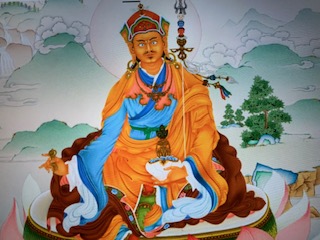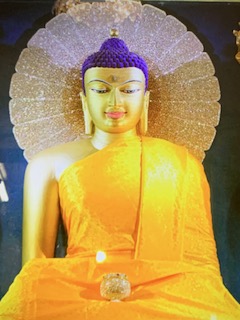
Buddhas

VAJRADHARA

THE PRIMORDIAL BUDDHA OF VAJRAYANA

PHẬT KIM CANG TRÌ (VAJRADHARA)

VỊ PHẬT NGUYÊN SƠ CỦA KIM CANG THỪA

Kagyu Lineage Transmission

Dòng truyền thừa Kagyu

Vajradhara → Tilopa → Naropa → Marpa → Milarepa → Gampopa

The Source of All Tantras and Direct Realization

Cội nguồn của mọi Tantra và chứng ngộ trực tiếp

📘 

MAIN CONTENT

1. Introduction | Giới thiệu

EN

Vajradhara is regarded as the Primordial Buddha in Vajrayana Buddhism, especially in the Kagyu lineage. He represents the ultimate nature of mind—pure, luminous, and beyond all duality. Vajradhara is not a historical figure but the embodiment of enlightenment itself.

VI

Vajradhara được xem là Phật Nguyên Sơ trong Phật giáo Kim Cang Thừa, đặc biệt trong dòng Kagyu. Ngài biểu trưng cho bản tánh tối hậu của tâm—thanh tịnh, sáng tỏ và vượt ngoài mọi nhị nguyên. Vajradhara không phải là nhân vật lịch sử, mà là hiện thân của giác ngộ.

2. Nature | Bản tánh

EN

Vajradhara symbolizes the Dharmakaya—the ultimate reality. He is beyond form, yet appears in form to transmit teachings. His essence is the inseparability of emptiness and luminosity.

VI

Vajradhara tượng trưng cho Pháp thân (Dharmakaya)—thực tại tối hậu. Ngài vượt ngoài hình tướng, nhưng vẫn hiện thân để truyền pháp. Bản tánh của ngài là sự bất nhị giữa tánh Không và quang minh.

3. Iconography | Biểu tượng

EN

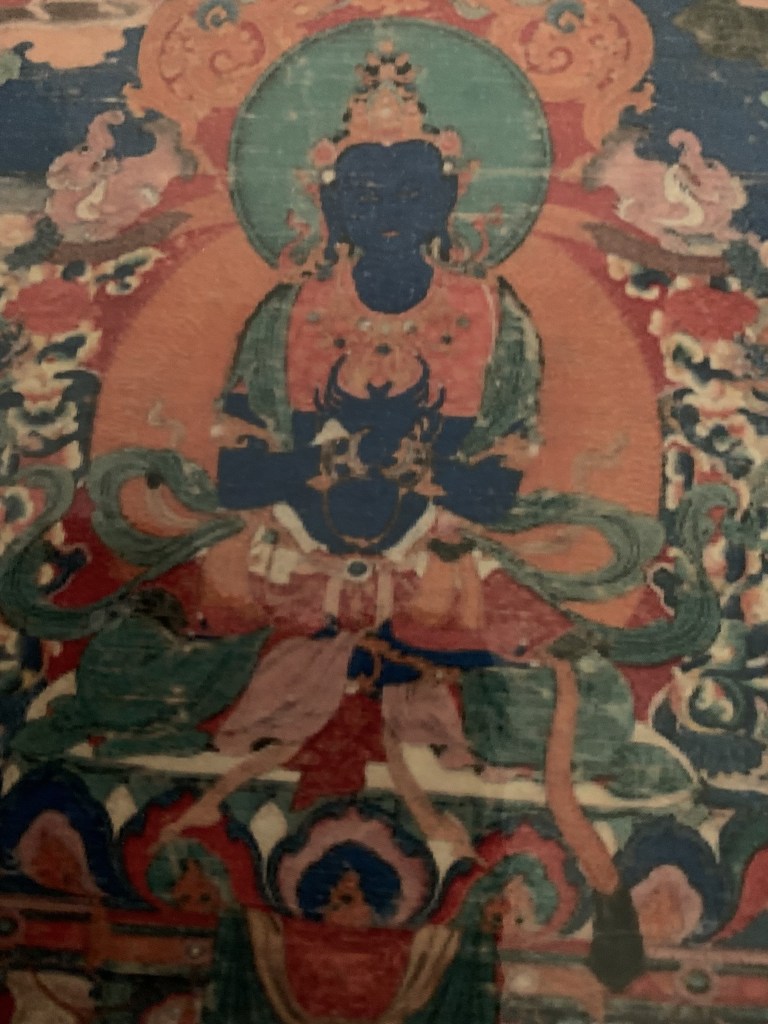
Vajradhara is usually depicted as a deep blue Buddha, holding a vajra (thunderbolt) and a bell crossed at his heart. The vajra represents skillful means (compassion), and the bell represents wisdom (emptiness).

VI

Vajradhara thường được mô tả với thân màu xanh đậm, cầm chày kim cang (vajra) và chuông (ghanta) bắt chéo trước tim. Chày tượng trưng cho phương tiện (từ bi), còn chuông tượng trưng cho trí tuệ (tánh Không).

4. Transmission | Truyền thừa

EN

According to Kagyu tradition, Vajradhara directly transmitted Mahamudra teachings to Tilopa. This transmission was not through ordinary teaching but through direct realization.

VI

Theo truyền thống Kagyu, Vajradhara trực tiếp truyền giáo pháp Đại Thủ Ấn cho Tilopa. Sự truyền pháp này không qua lời nói thông thường, mà là sự truyền trực tiếp qua chứng ngộ.

5. Vajradhara and Mahamudra | Vajradhara và Đại Thủ Ấn

EN

Mahamudra teachings originate from Vajradhara. They point directly to the nature of mind, beyond concepts, beyond effort, beyond duality.

VI

Giáo pháp Đại Thủ Ấn bắt nguồn từ Vajradhara. Chúng chỉ thẳng vào bản tánh của tâm, vượt ngoài khái niệm, vượt ngoài nỗ lực và vượt ngoài nhị nguyên.

6. Symbolic Meaning | Ý nghĩa biểu tượng

EN

Vajradhara represents:

  • The union of wisdom and compassion
  • The indivisibility of emptiness and awareness
  • The innate Buddha nature present in all beings

VI

Vajradhara tượng trưng cho:

  • Sự hợp nhất giữa trí tuệ và từ bi
  • Sự bất nhị giữa tánh Không và nhận biết
  • Phật tánh vốn sẵn có trong mọi chúng sinh

7. Inner Meaning | Ý nghĩa nội tại

EN

Vajradhara is not separate from one’s own mind. To realize Vajradhara is to recognize the true nature of one’s own awareness.

VI

Vajradhara không tách rời khỏi tâm của chính mình. Nhận ra Vajradhara chính là nhận ra bản tánh thật của nhận biết.

8. Practice | Thực hành

EN

In Vajrayana, practitioners visualize Vajradhara or receive empowerment. Ultimately, the goal is to dissolve all appearances and rest in pure awareness.

VI

Trong Kim Cang Thừa, hành giả quán tưởng Vajradhara hoặc nhận quán đảnh. Cuối cùng, mục tiêu là tan hòa mọi hiện tượng và an trú trong nhận biết thuần khiết.

9. Legacy | Di sản

EN

Vajradhara is the source of all Kagyu teachings. Through Tilopa, Naropa, Marpa, and Milarepa, this realization has been transmitted as a living lineage.

VI

Vajradhara là nguồn gốc của toàn bộ giáo pháp Kagyu. Qua Tilopa, Naropa, Marpa và Milarepa, sự chứng ngộ này được truyền như một dòng sống.

10. Closing Reflection | Lời quán chiếu

EN

The Buddha you seek is not elsewhere.

It is the awareness that sees this moment.

VI

Vị Phật bạn tìm không ở đâu khác.

Chính là nhận biết đang thấy khoảnh khắc này.

MEDECINE BUDDHA

Introduction to the Medicine Buddha SutraGiới thiệu Kinh Dược Sư

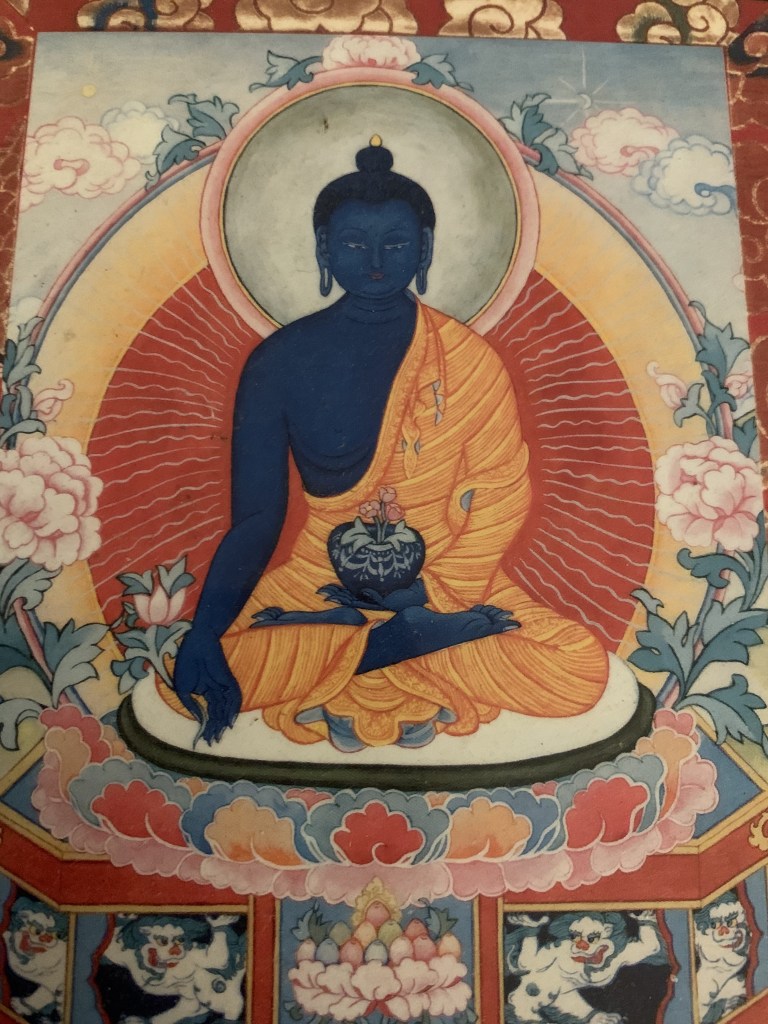
The Medicine Buddha Sutra was taught by Buddha Shakyamuni

on Vulture Peak in Rājagṛha.

He revealed the Pure Land of the East, Lapis Light,

where dwells Bhaiṣajya-guru Vaidūrya-prabhā Tathāgata,

the Medicine Buddha.

In his bodhisattva path, Medicine Buddha made

twelve great vows to heal illness, remove suffering, bring peace and wisdom, and guide beings to liberation.

The Buddha declared that anyone who hears or recites

Medicine Buddha’s name, offers prayers, or practices his mantra

will receive protection, relief from suffering, and freedom

from lower rebirths. At death, recalling his name brings peace and a fortunate rebirth.

The sutra also speaks of seven Medicine Buddhas,

each with their own vows to aid beings.

Shakyamuni Buddha urged all followers—monks, rulers,

and lay people—to uphold this practice for

immense benefit in this life and future lives

.—Kinh Dược Sư được Đức Phật Thích Ca thuyết tại núi Linh Thứu,

thành Vương Xá.Ngài giới thiệu cõi Tịnh Độ phương Đông –

Lưu Ly Quang Trang Nghiêm, nơi ngự Dược Sư Lưu Ly Quang Như Lai.

Khi còn tu hạnh Bồ Tát, Ngài phát 12 đại nguyện cứu chữa bệnh khổ,

trừ diệt đau buồn, đem lại an lạc, trí tuệ và đưa chúng sinh đến giải thoát.

Đức Phật dạy: ai nghe danh hiệu Dược Sư,

chí thành xưng niệm, cúng dường, trì chú,

đều được gia hộ, tiêu trừ khổ nạn, tránh xa đường ác.

Khi lâm chung, nếu nhớ niệm danh hiệu Ngài thì tâm an ổn,

được sinh vào cảnh giới an lành.Kinh cũng nhắc đến 7 vị Phật Dược Sư,

mỗi vị đều có nguyện lực cứu độ chúng sinh.

Đức Thích Ca khuyên hàng Tăng, vua quan và cư sĩ

hãy trì giữ pháp này để được lợi ích vô lượng trong đời này và đời sau.—

….

The Twelve Great Vows of the Medicine Buddha(Mười hai Đại Nguyện của Phật Dược Sư)-

–1. Radiant Body of Light – Ánh sáng thân thanh tịnh

May my body shine with brilliant light, illuminating all beings, so they attain wisdom and purity.

Nguyện thân ta tỏa ánh sáng thanh tịnh, chiếu soi muôn loài, khiến chúng sinh đều được trí tuệ và thanh tịnh.–

-2. Perfect Form – Thân tướng viên mãn

May my form be perfect and adorned, inspiring beings to follow the path of virtue.

Nguyện thân tướng ta viên mãn trang nghiêm, khiến chúng sinh phát tâm hướng thiện.—

3. Endless Healing – Chữa lành vô tận

May I provide inexhaustible healing, removing sickness and afflictions of body and mind.

Nguyện ta ban sự chữa lành vô tận, trừ diệt mọi bệnh khổ của thân và tâm.–

-4. Fulfillment of Needs – Đầy đủ nhu cầu

May I fulfill the needs of beings, giving them all necessities without lack.

Nguyện cho chúng sinh được đầy đủ mọi nhu cầu, không còn thiếu thốn

.—5. Guidance on the Path – Dẫn dắt trên đạo lộ

May I guide those astray onto the path of enlightenment.

Nguyện dẫn dắt kẻ lầm đường trở về chánh đạo giác ngộ.-

–6. Upholding Pure Conduct – Giữ giới thanh tịnh

May beings uphold pure morality and live in harmony.

Nguyện cho chúng sinh giữ gìn giới hạnh thanh tịnh, sống hòa hợp an vui.–

-7. Healing from Defilements – Giải thoát nhiễm ô

May beings be freed from all defilements, as pure as lapis lazuli.

Nguyện cho chúng sinh thoát khỏi mọi nhiễm ô, tâm sáng như lưu ly.-

–8. Relief from Poverty – Thoát khổ nghèo thiếu

May those in poverty gain abundance and happiness.

Nguyện cho kẻ nghèo khổ được no đủ và hạnh phúc.–

-9. Liberation from Evil – Thoát khỏi tà ác

May beings be protected from demons, dangers, and evil influences.

Nguyện cho chúng sinh được che chở, thoát khỏi ma quỷ và hiểm nạn.

—10. Women Finding Freedom – Nữ giới được tự do

May women oppressed by suffering, if they wish, be reborn as men to practice the Dharma with freedom.

Nguyện cho những người nữ chịu nhiều đau khổ, nếu mong cầu, được tái sinh làm nam để thuận tiện tu hành.—

11. Liberation from Wrong Views – Giải thoát tà kiến

May those with wrong views be guided to right understanding and noble wisdom.

Nguyện cho kẻ chấp tà kiến đều quay về chính kiến và trí tuệ cao quý

.—12. Ultimate Liberation – Giải thoát tối thượng

May beings attain liberation from birth and death, realizing Buddhahood without hindrance.

Nguyện cho chúng sinh thoát khỏi luân hồi sinh tử, thành Phật quả viên mãn, không chướng ngại.


Amitabha-Phật A Di Đà

NAM MÔ A DI ĐÀ PHẬT

NAMO AMITABHA


ORIGINS OF AMITABHA BUDDHA/PHẬT A DI ĐÀ

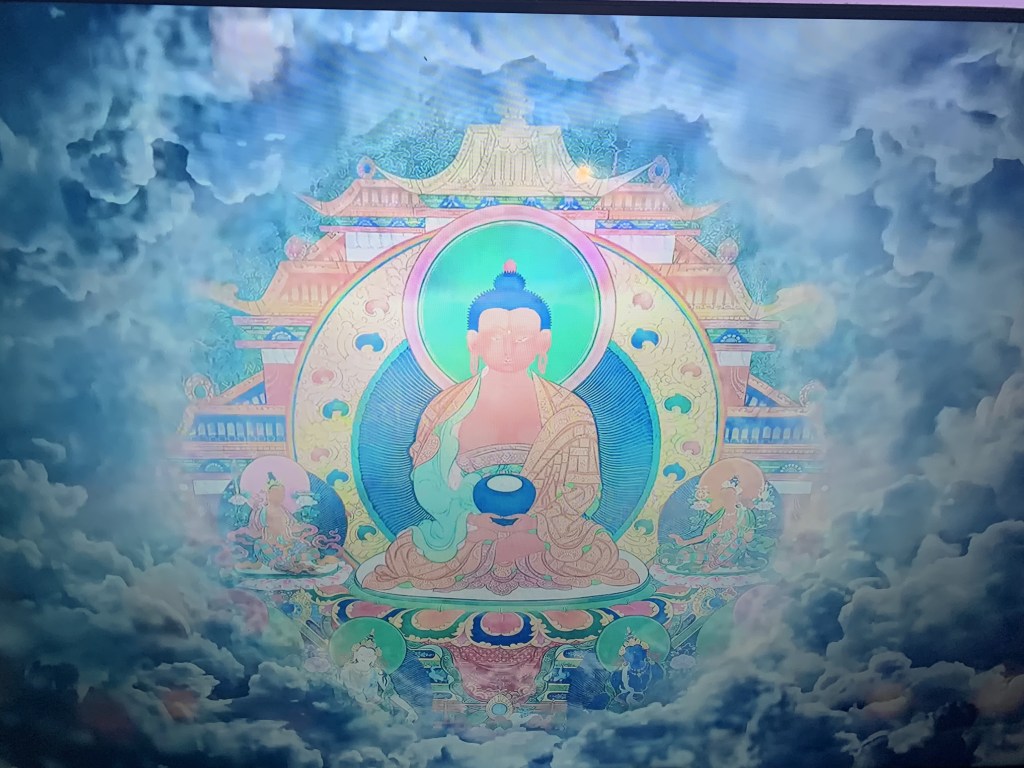
Amitabha Buddha is not a historical figure like Shakyamuni Buddha, but a celestial Buddha described in Mahayana Sutras, especially the Infinite Life Sutra, the Contemplation Sutra, and the Amitabha Sutra.

According to these sutras, countless eons ago, a king named Dharmakara renounced the world, became a monk, and made 48 great vows to save all beings. After fulfilling these vows, he attained Buddhahood and became Amitabha, establishing the Western Pure Land – a blissful realm free from suffering, where anyone with sincere aspiration can be reborn.

Pure Land


The Pure Land (Sukhāvatī) is the blissful realm established by Amitābha Buddha through his vows.
It is described in the Sukhāvatīvyūha Sūtras as a land free from suffering, adorned with lakes of jewels, lotus blossoms, and melodious birds reciting the Dharma.
Beings who are reborn there through faith, recitation of Amitābha’s name, and dedication of merit, encounter no obstacles to practice.
Guided directly by Amitābha and great Bodhisattvas, they swiftly progress toward enlightenment.

Contemplation of Amitabha before Passing Away –

English & Vietnamese

E MA HO!

Exalted Amitabha, sovereign of the realm,Great Compassion,

Lord of vast activity,Vajrapani, holder of power,

and the great assembly of Bodhisattvas,bless me to be born in Dewachen

E MA HO!

Ôi kỳ diệu thay!Đức Phật A Di Đà tôn quý, bậc chủ cõi Tịnh Độ,

Đức Quán Thế Âm Bồ Tát , Đại Từ Bi, Ngài Kim Cang Thủ,

vị trì giữ năng lực,cùng đại chúng Bồ Tát hùng hậu,xin gia trì cho con được sinh về Dewachen.

Short Practice before Passing:

1. Calm the mind – breathe gently, let go of the body.

2. Visualization – In the sky before you, imagine Buddha Amitabha, red in color, radiant, seated on a lotus throne, radiating infinite light.

3. Aspiration – Recite: ‘At the moment of death, may I not fall into other realms, but be instantly reborn in Dewachen before Amitabha Buddha.

‘4. Mantra – Chant OM AMI DEWA HRIH (at least 7 times).

5. Surrender – Release all clinging, merge your mind into the compassionate light of Amitabha.

Thực hành ngắn trước khi lâm chung:

1. An tâm – Hít thở nhẹ, buông bỏ thân xác.

2. Quán tưởng – Trên hư không trước mặt, tưởng Đức Phật A Di Đà thân màu đỏ, sáng rực, ngồi trên tòa sen, tỏa ánh sáng vô lượng.

3. Cầu nguyện –

Đọc: ‘Nguyện khi con lâm chung, không rơi vào cảnh giới khác, mà được sinh ngay về Dewachen, trước Đức A Di Đà Vô Lượng Quang.’

4. Trì chú – Niệm OM AMI DEWA HRIH hay NAMO A DI ĐÀ PHẬT(ít nhất 7 lần).

5. Buông Xả – Buông bỏ mọi bám chấp, để tâm tan hòa vào ánh sáng từ bi của Đức Phật A Di Đà.

Source: Original Tibetan text and English translation from Tibetan Language Institute (public domain).

Dewachen prayer/Lời nguyện Vãng Sinh

English & VietShort Version

E MA HO!

How wondrous!

In the pure land of Bliss, Dewachen,

dwells the Buddha Amitabha, Infinite Light,together with Avalokiteshvara, Great Compassion,and Vajrapani, the Great Power,

surrounded by countless Buddhas and Bodhisattvas.

E MA HO!

Kỳ diệu thay!

Trong cõi Tịnh Độ an lạc, Dewachen,

có Đức Phật A Di Đà – Vô Lượng Quang,

với Quán Thế Âm – Đại Bi,và Kim Cang Thủ – Đại Lực,vây quanh là vô số chư Phật và Bồ Tát.

In this realm of supreme, boundless joy,may we, at the very moment this life ends,without wandering through other states,be born directly there, before the Buddha Amitabha.

Trong cảnh giới hoan lạc tối thượng, vô biên,nguyện ngay khoảnh khắc khi đời này chấm dứt,không lang thang qua những cõi khác,được sinh thẳng về đó, trước Đức Phật A Di Đà.

Through the power of these prayers,may all obstacles be cleared away.

TADYATHA · PANCA INDRIYA AVABODHANAYE · SVAHA (recite 3 times)

Nhờ năng lực của lời nguyện này,nguyện mọi chướng ngại đều được tiêu trừ.

TADYATHA · PANCA INDRIYA AVABODHANAYE · SVAHA (tụng 3 lần)

Source: Original Tibetan text and English translation from Tibetan Language Institute (public domain).